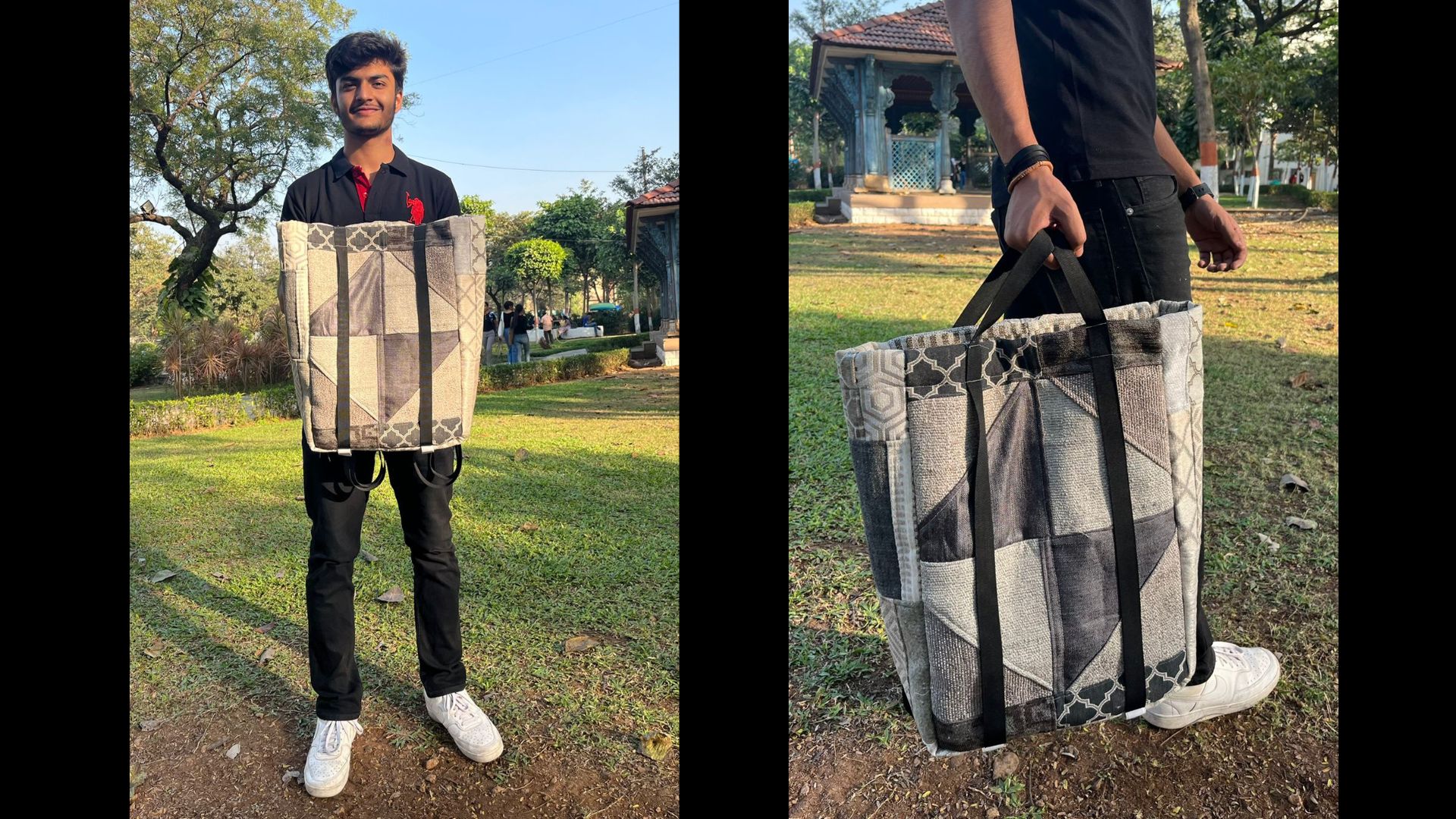
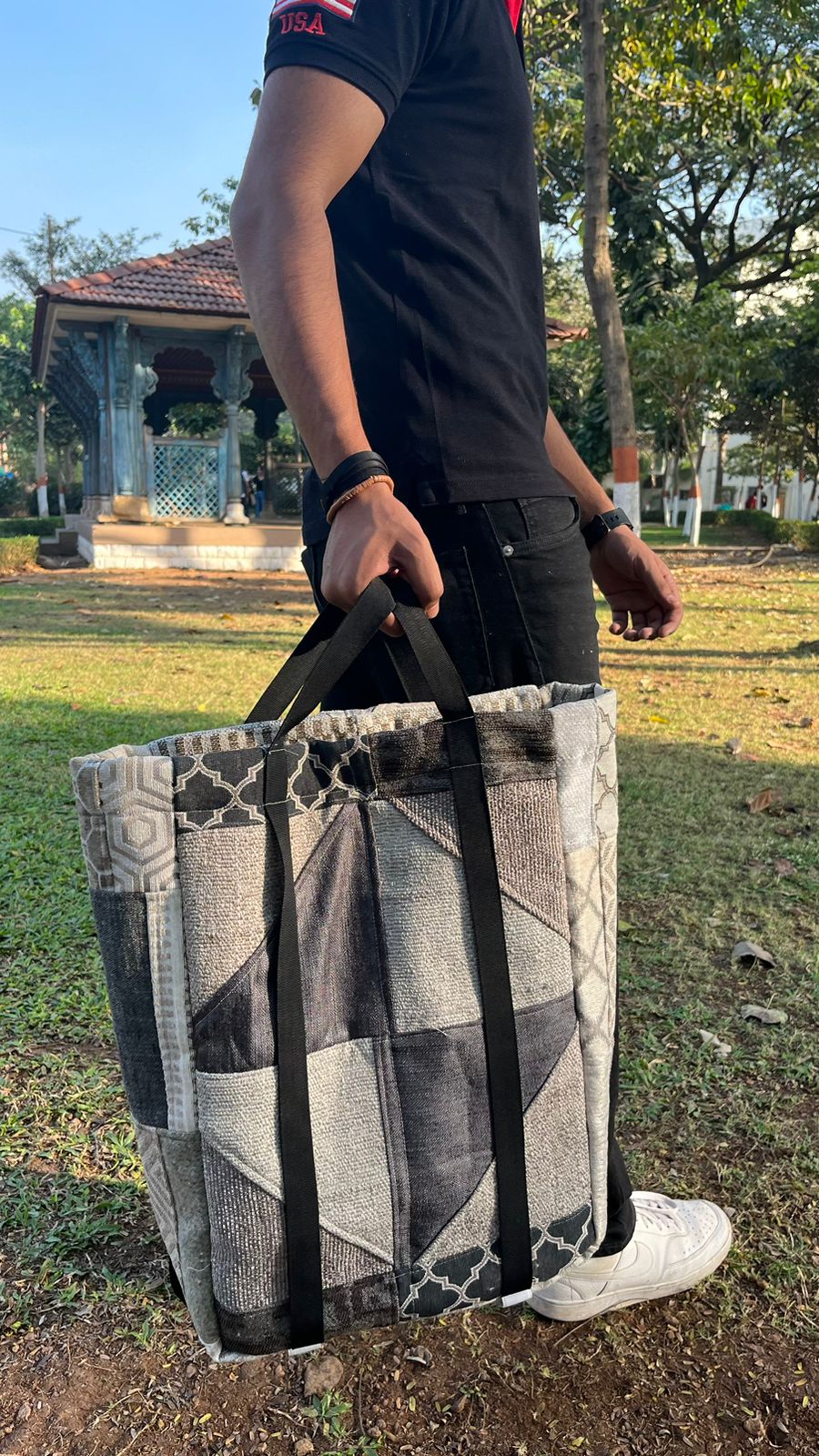
A convertible gym bag designed from textile waste, enabling dual-mode carry as a backpack and duffle.
00
problem
The increasing volume of textile waste presents a major environmental challenge, with discarded fabric often lacking uniformity in size, strength, and texture making it difficult to repurpose effectively. The challenge was to design a functional and aesthetically cohesive product using only these irregular textile scraps (chindis), while working within strict constraints of time and available resources.
solution
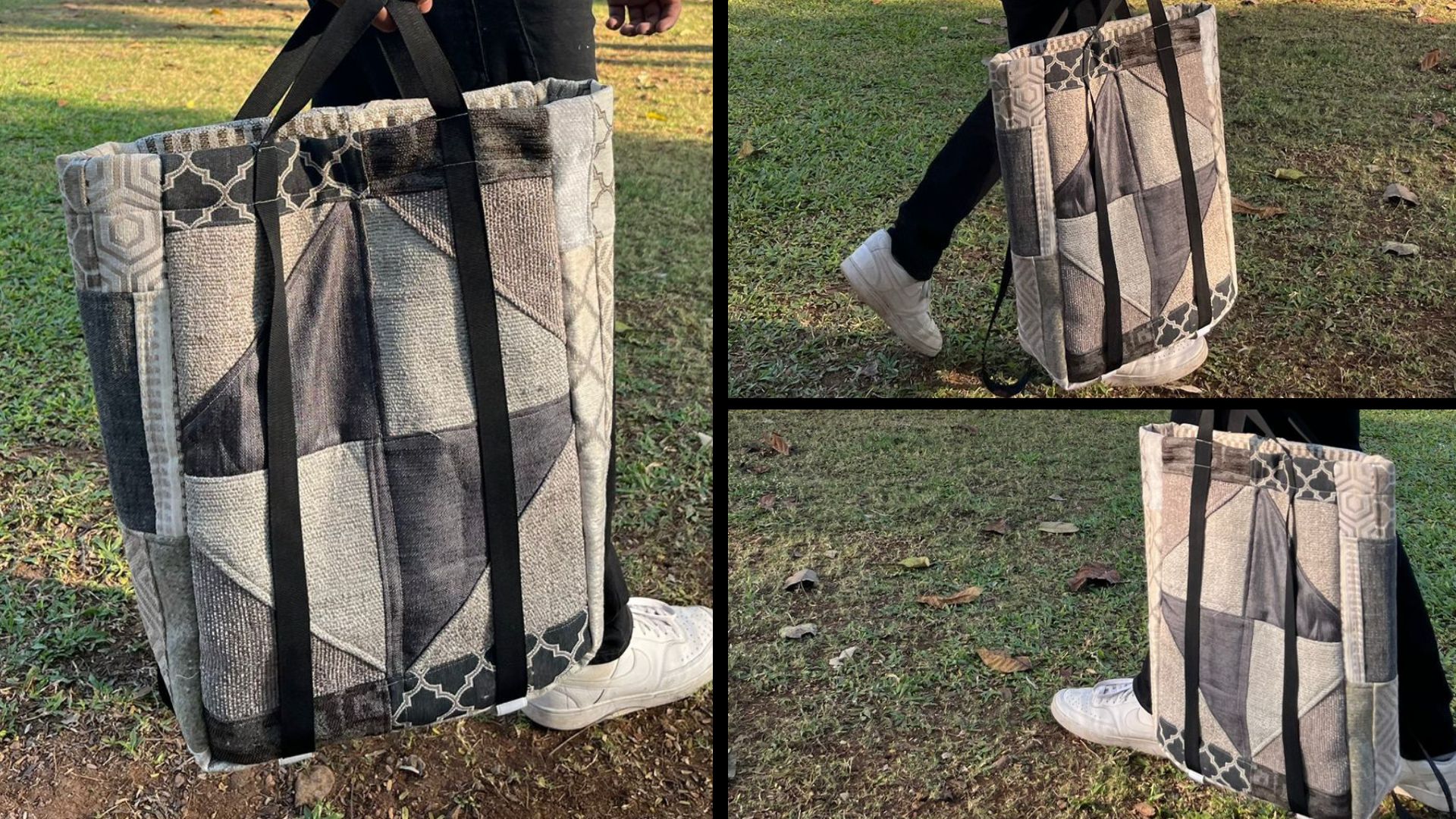
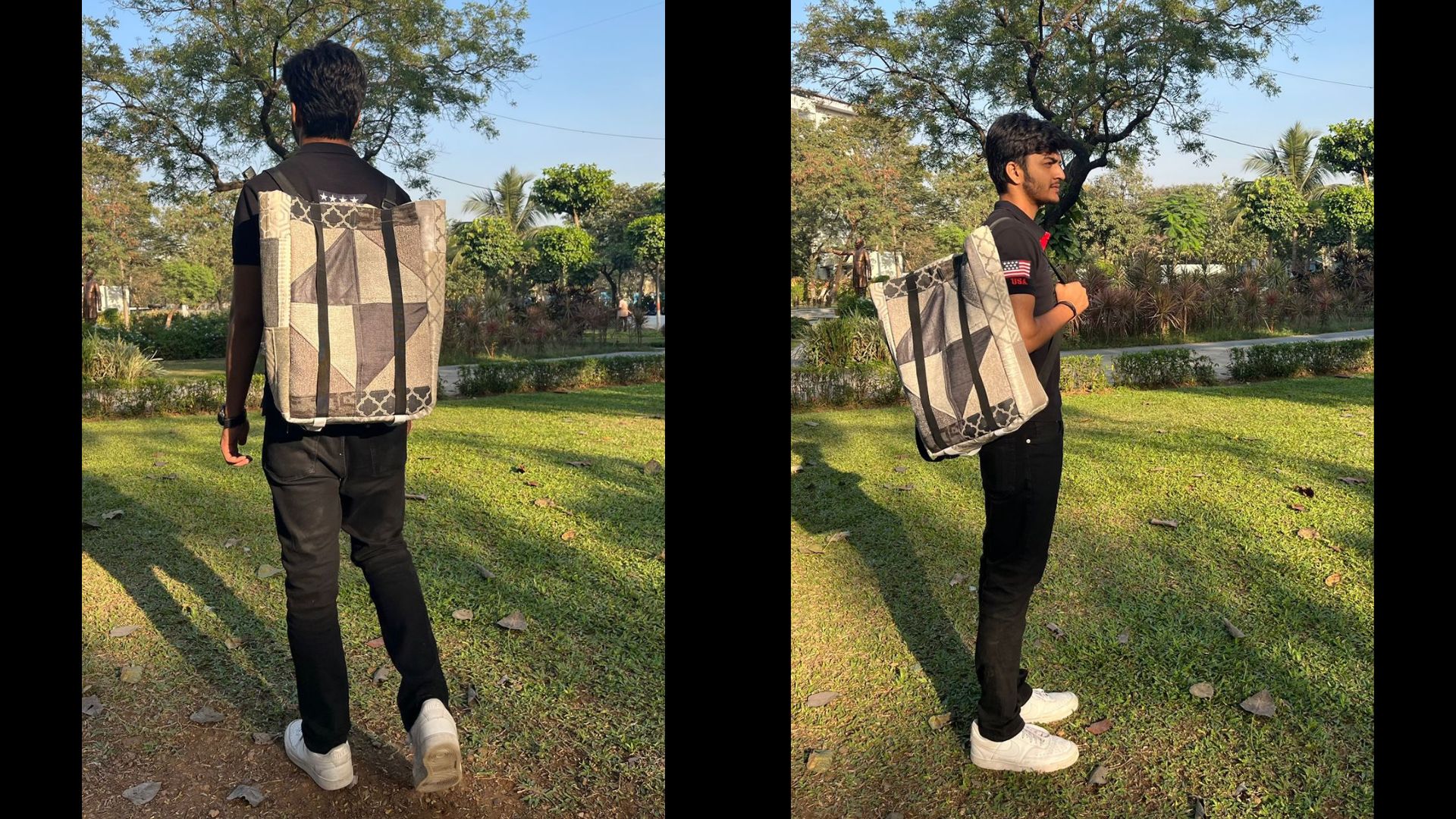
DUALPACK addresses this challenge by transforming textile waste into a versatile, dual-function carry solution. The bag is designed to operate in two modes: * Backpack mode for mobility and hands-free use * Duffle mode for quick, convenient carrying Through careful selection and composition of fabric scraps, a structured patchwork surface was created, ensuring both durability and visual coherence. The design embraces material inconsistency and turns it into a defining aesthetic feature.
Story
DUALPACK was developed during an intensive 2-day workshop in collaboration with Bunko Junko, focusing on transforming textile waste into functional products. The process was fast-paced, hands-on, and driven entirely by material constraints.
Material Collection & Understanding
The process began with a collection of discarded textile scraps (chindis), each varying in size, texture, pattern, and durability.
No uniform material was available
Each piece had different structural properties
Required understanding material limitations before designing
This stage set the foundation for a material-led design approach, where the fabric dictated the direction rather than a predefined idea.
year
2022
timeframe
2-Day Workshop
tools
Hand Fabrication,Sewing & Stitching
category
Upcycling
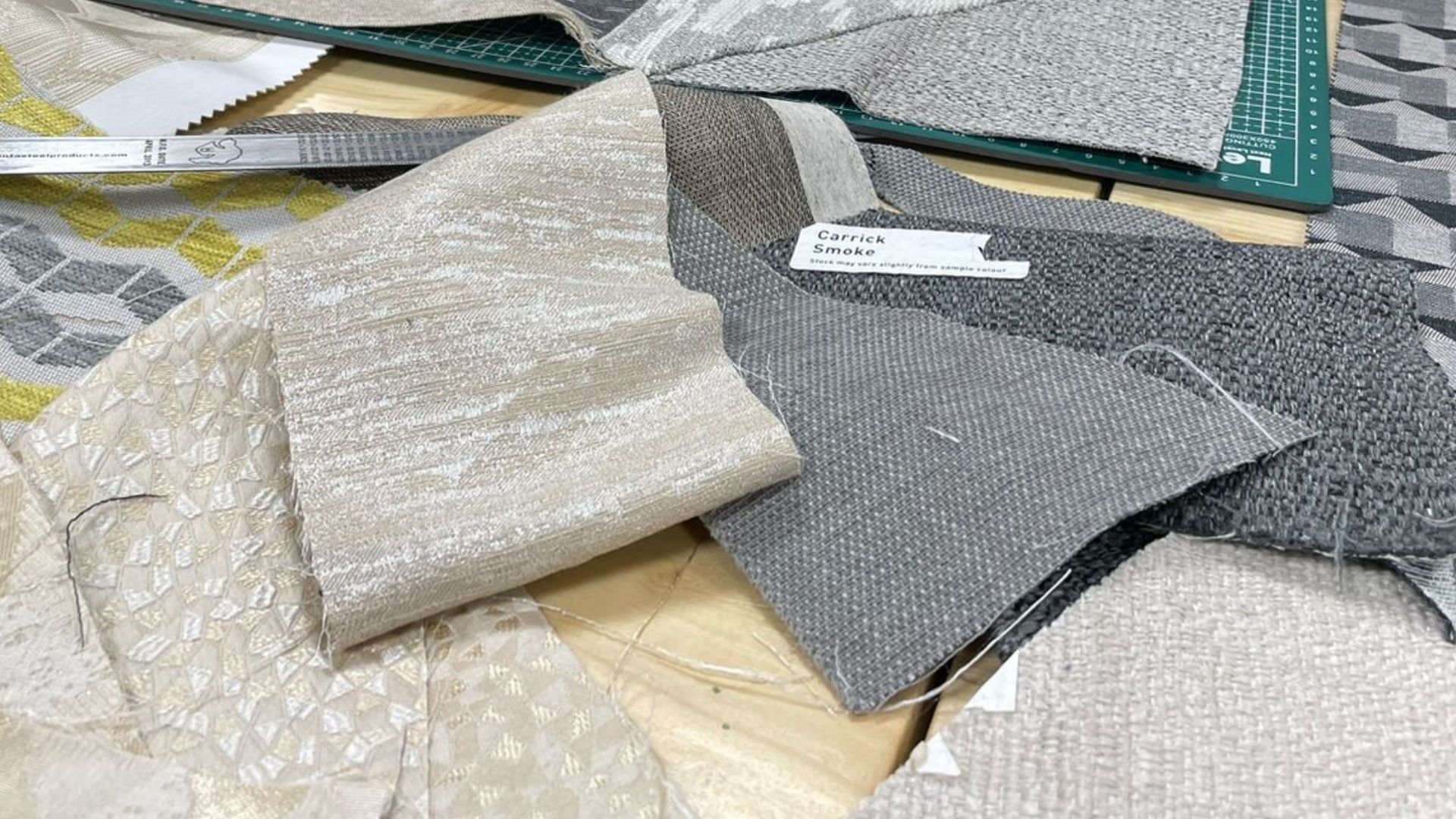
Sorting & Visual Mapping
To bring coherence to randomness, fabrics were sorted and grouped based on:
Color tones and contrast
Patterns and textures
Thickness and strength
These combinations were then arranged into different layouts to explore how individual pieces could come together as a unified surface. This led to the development of a patchwork composition system.
Concept Development
With the material language defined, the focus shifted to functionality.
The idea was to create a versatile gym bag that could adapt to different usage scenarios.
Designed as a 2-in-1 product
Functions as both a backpack and a duffle bag
Focus on ease of carrying and usability
This stage involved deciding proportions, orientation, and how the bag would transition between modes.
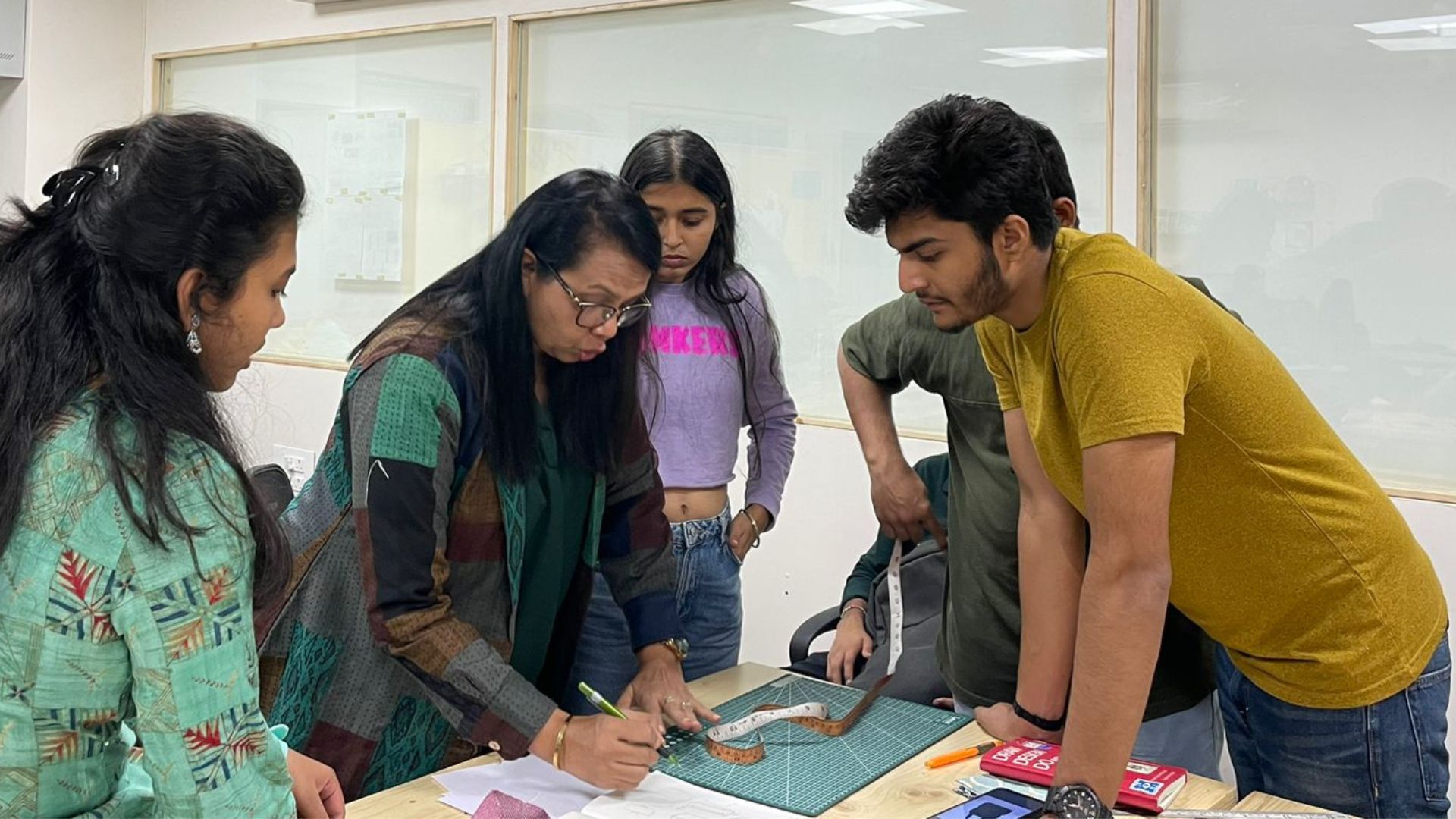
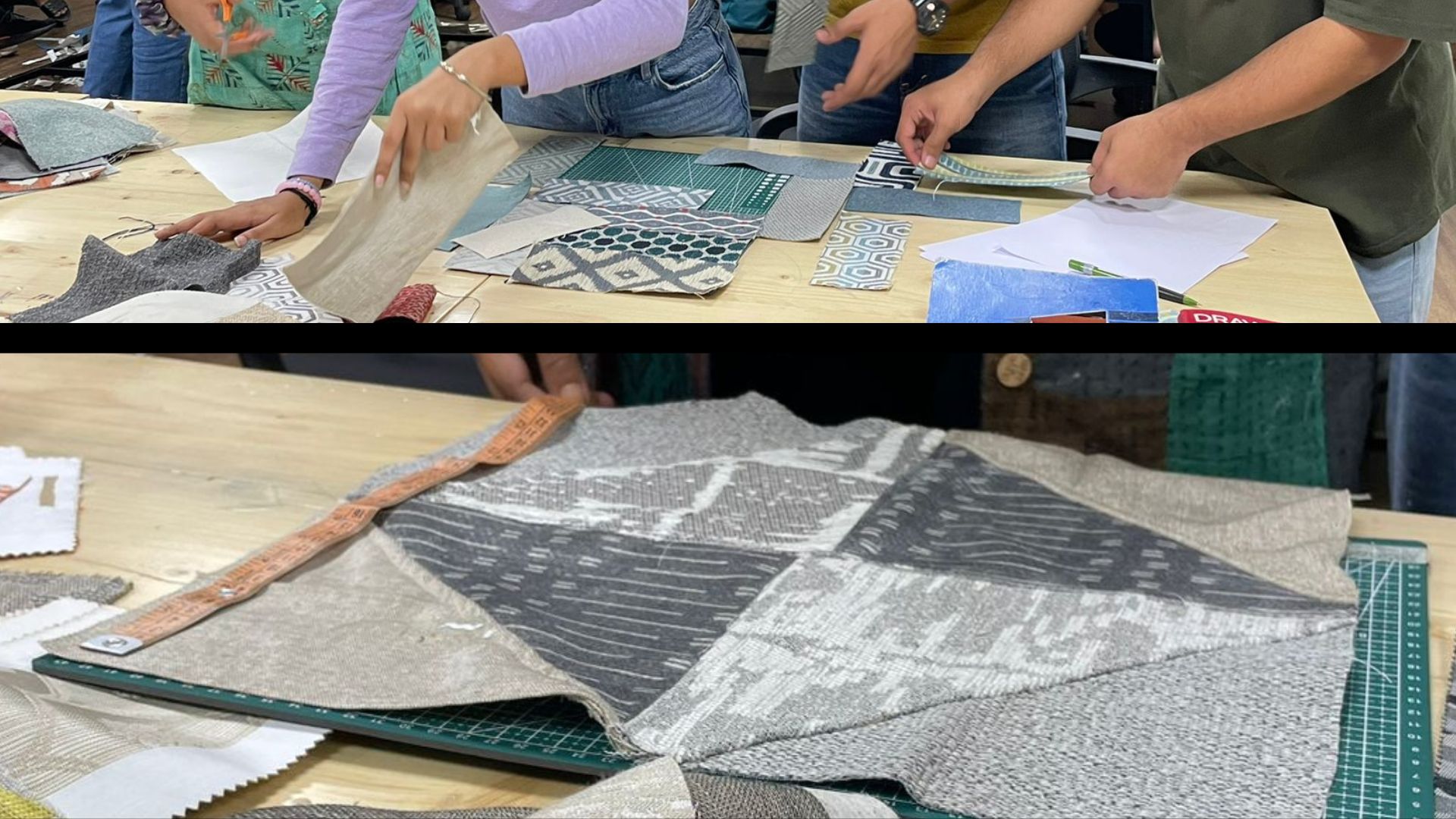
Form & Construction Strategy
The patchwork layout was translated into actual panels.
Fabric pieces were cut and aligned
Layering was used to improve strength
Panels were structured to maintain shape
Special attention was given to strap placement and load distribution, ensuring that both modes of use were practical and comfortable.
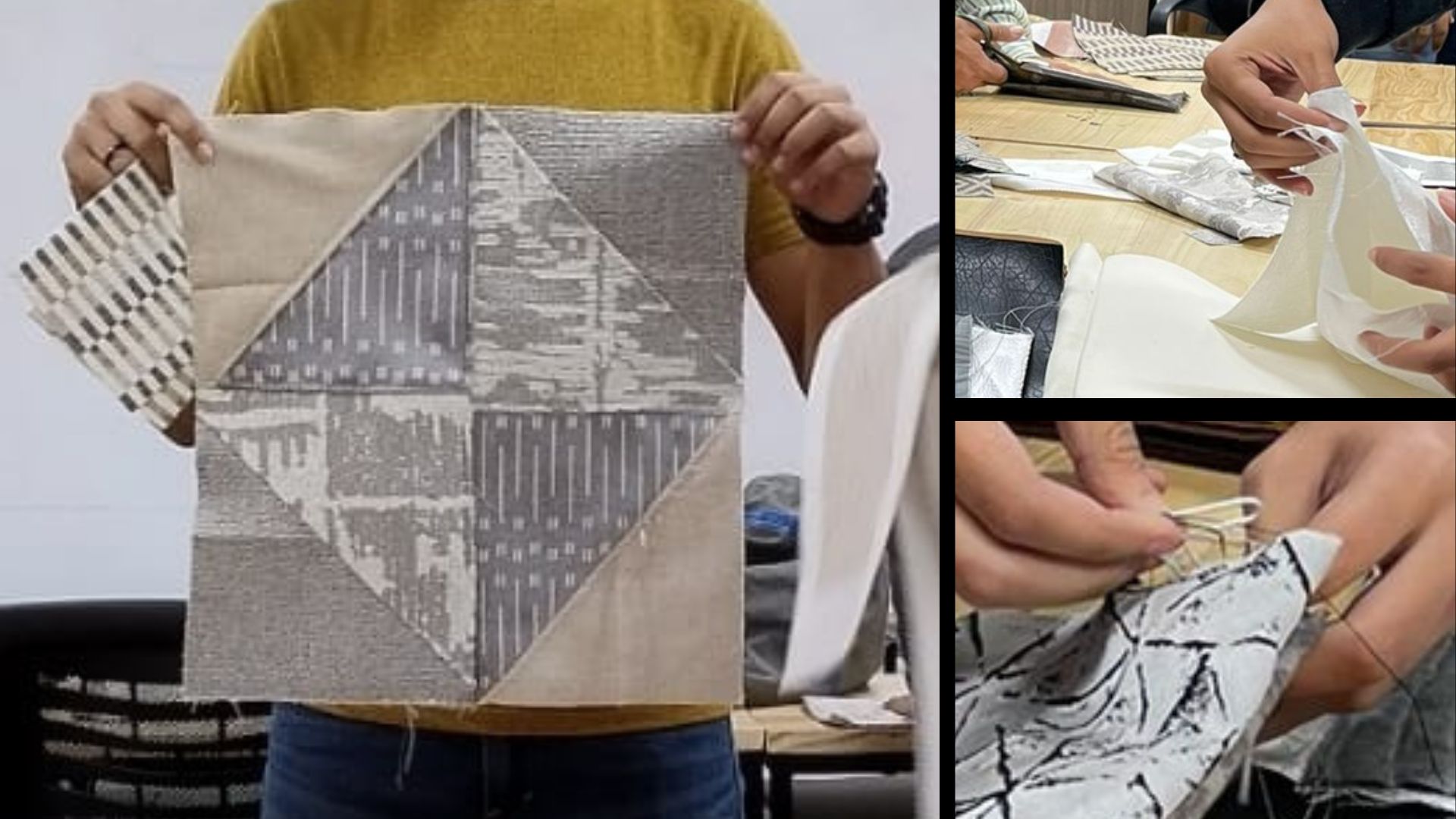
Making & Collaboration
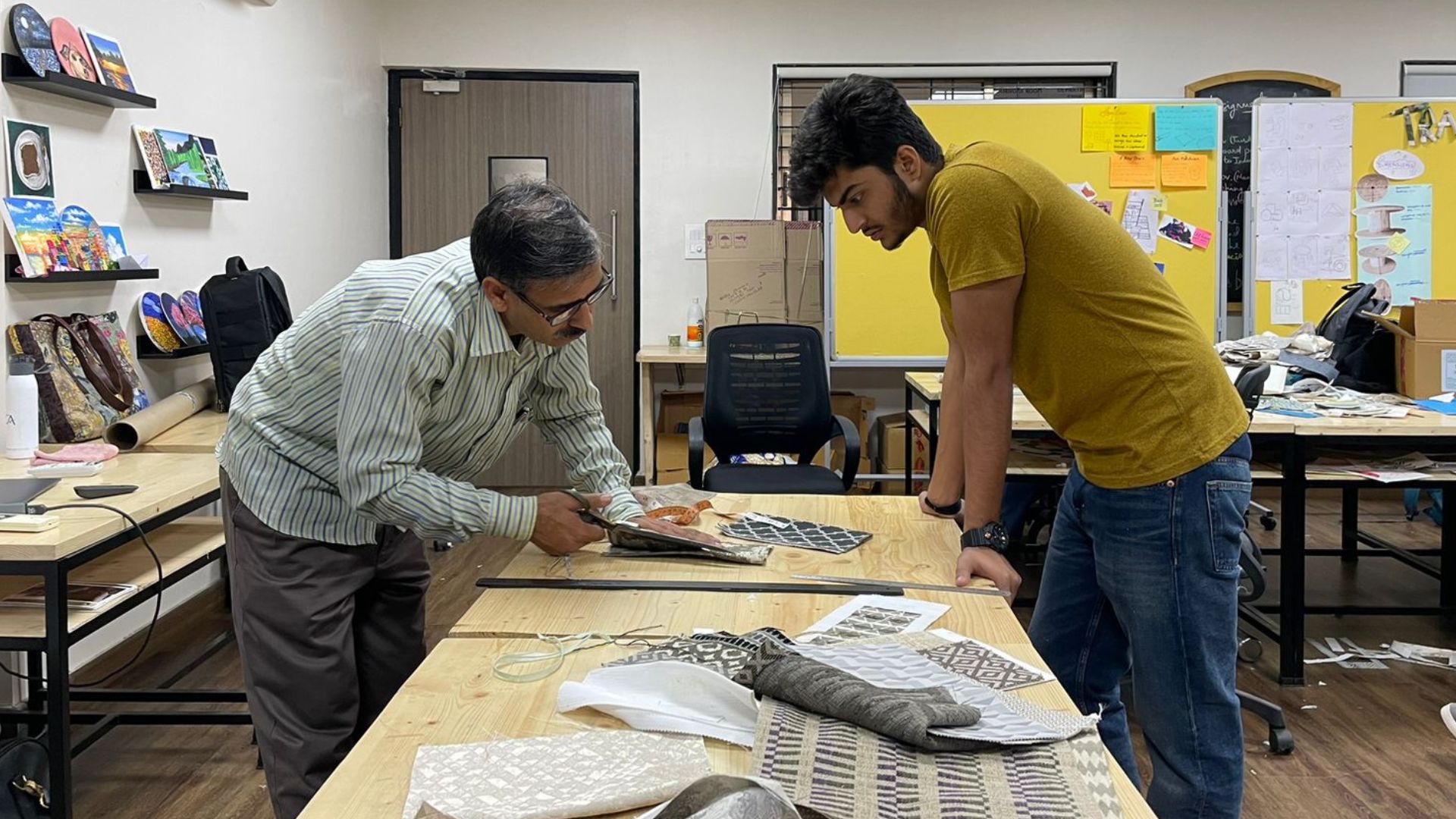
The assembled panels were stitched together with the help of a skilled tailor.
Precision stitching ensured durability
Reinforcements were added at stress points
Final structure was refined through hands-on adjustments
This phase highlighted the importance of craftsmanship in bringing design ideas to life.
Final Outcome
01
02
03