A moment of instinct and sacrifice. translated into motion.
00
problem
How do you make a story move? This project began with a challenge that was both simple and complex at the same time to take a written story, reinterpret it, and translate it into a working physical model. Not something static, not just a representation, but something that actually moves and communicates. Stories naturally carry emotion tension, urgency, conflict, and meaning. But mechanical systems don’t understand emotion; they only understand motion. This created a gap that needed to be bridged. The real challenge was not building the model, but figuring out how a mechanism could carry the weight of a narrative. How can movement express urgency? How can a system communicate instinct? That became the core problem.
solution
Instead of trying to represent the entire story, I chose to focus on a single, powerful moment — the chase. This decision shaped everything that followed. The chase was the most dynamic part of the story. It had direction, tension, speed, and emotional intensity. More importantly, it was a moment that could naturally be translated into motion. By narrowing the scope, I was able to design a system where the entire narrative is compressed into a continuous loop of movement. The goal wasn’t to tell the full story. It was to make the viewer feel it.
STORY
Deep within the forests of Brahmagiri, everything feels calm — until it suddenly isn’t.
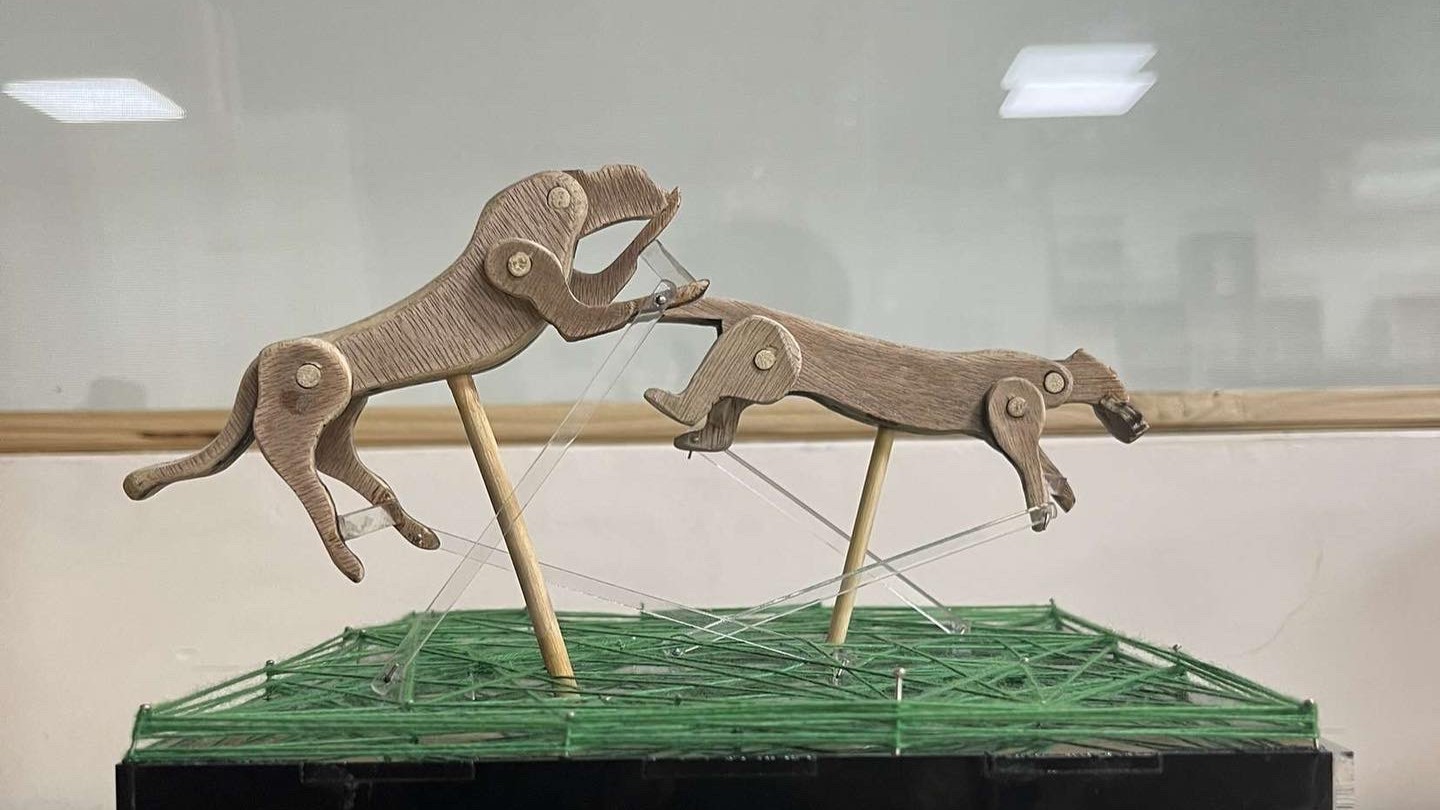
A mother cheetah returns after a hunt, only to discover that one of her cubs is missing. In the distance, she spots a leopard running away, carrying something in her mouth.
Without hesitation, she begins the chase.
This moment is driven purely by instinct — not logic, not hesitation, just a raw and immediate response. It’s a moment filled with urgency and emotion, where survival and motherhood collide.
Later, when both are brought before Akala, the wise elder, the truth is revealed through a simple yet powerful decision. Both are asked to choose between their own life and the life of the cub.
The leopard chooses herself.
The cheetah chooses her cub.
And in that moment, the truth becomes undeniable.
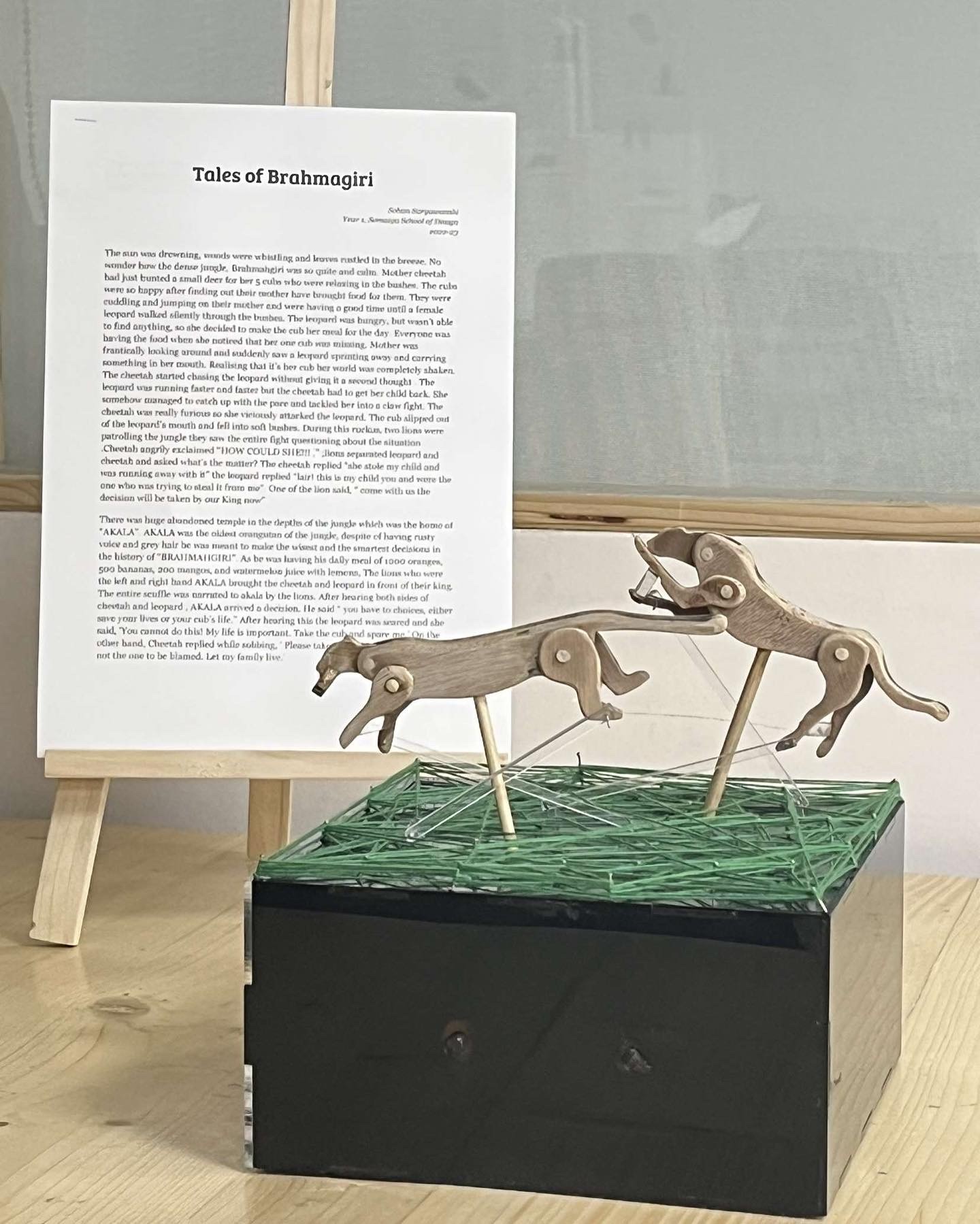
BRAHMAGIRI.pdf
year
2022
timeframe
2 Weeks
tools
Laser Cutting · Plywood · Acrylic · Hand Fabrication · Crank Mechanism
category
Model Making
DESIGN TRANSLATION
Translating this story into a physical form required simplifying it into its most essential elements — form and motion.
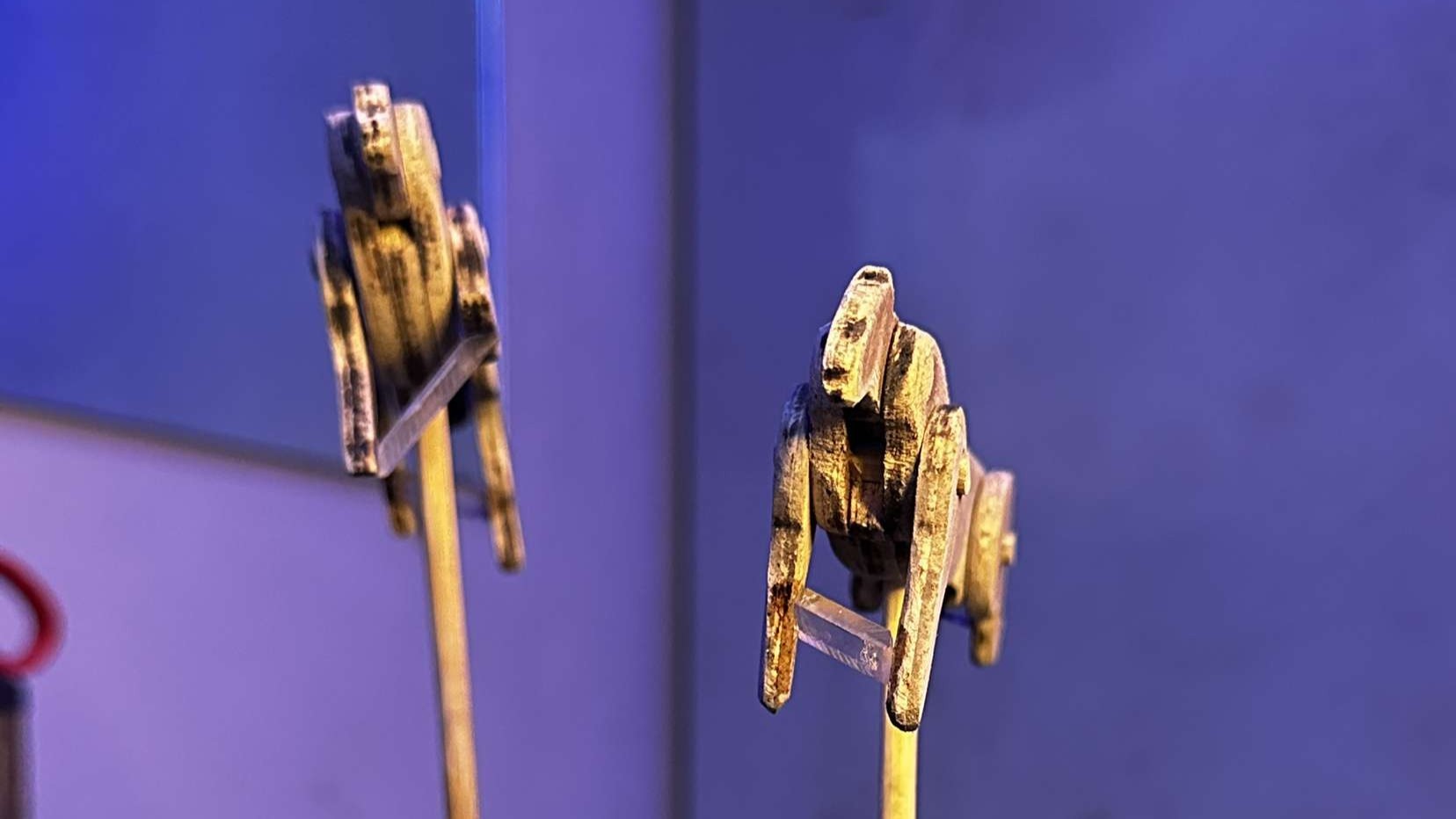
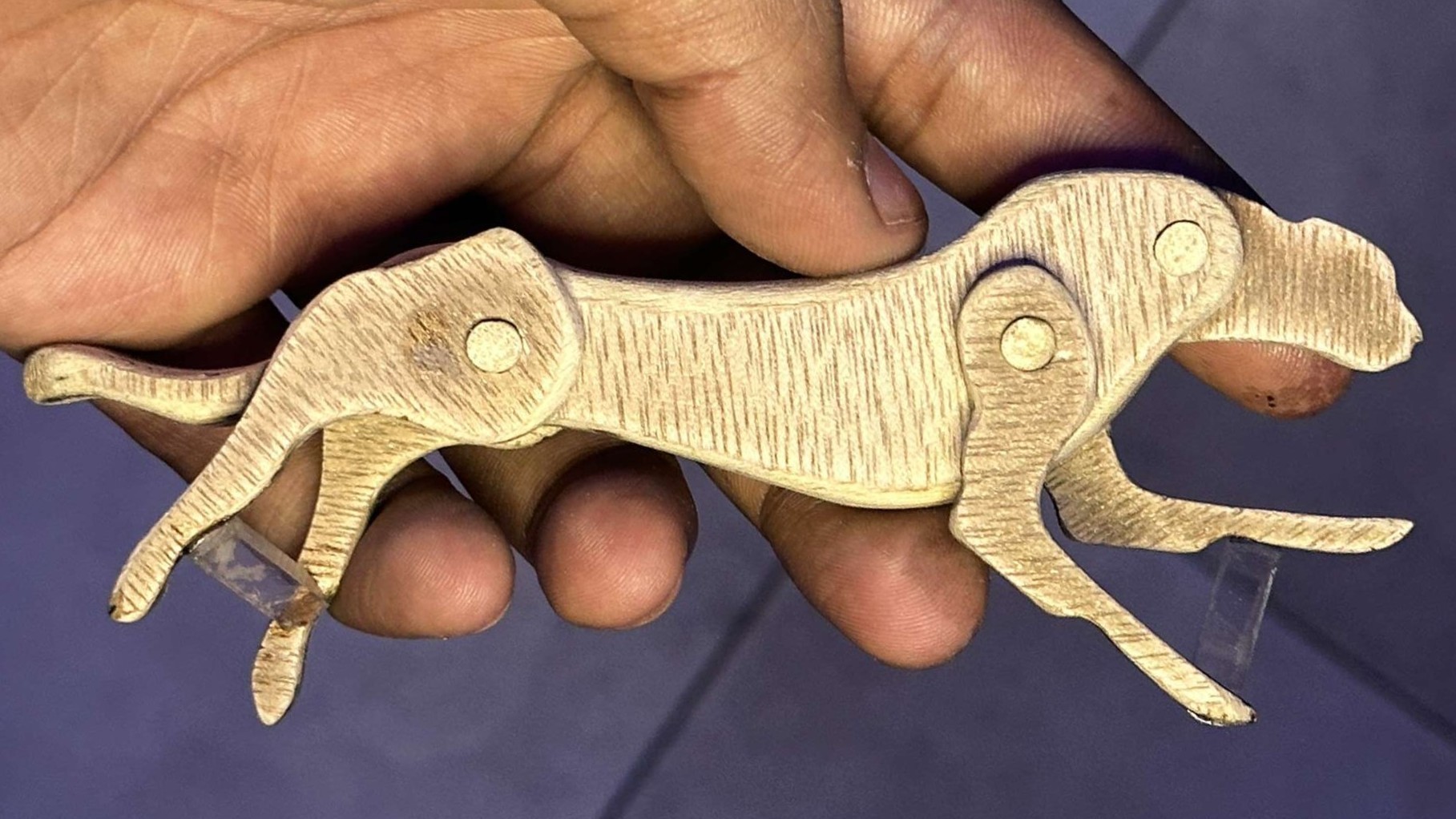
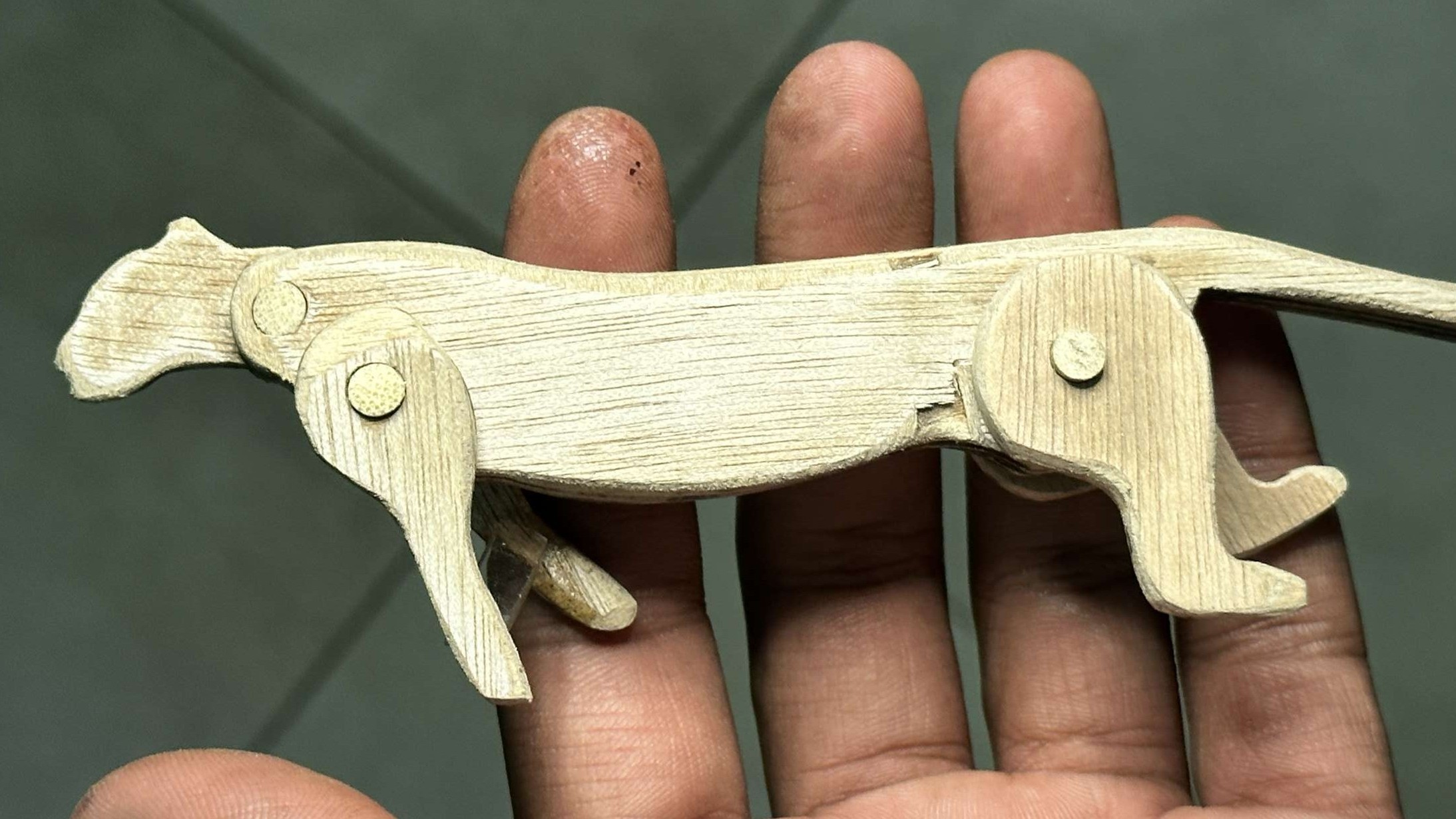
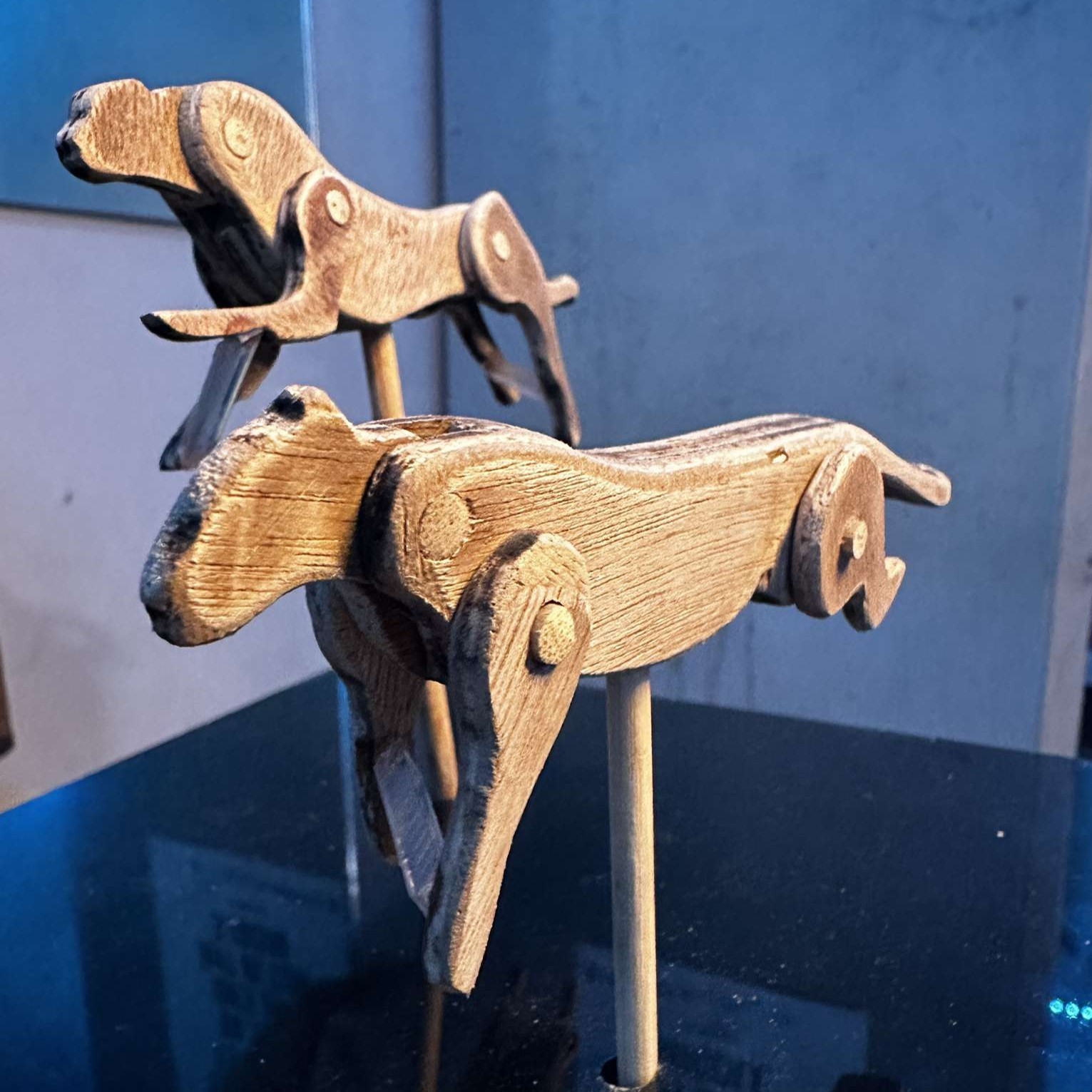
Instead of focusing on realistic detailing, I focused on capturing the essence of the animals through clean silhouettes and dynamic posture. The idea was to create something that feels alive, even with minimal detail.
The motion was intentionally not realistic. Instead, it was exaggerated and rhythmic, designed to suggest running rather than replicate it. This allowed the mechanism to stay simple while still being expressive.
The entire model is built around one idea:
Let motion carry the story.
FORM DEVELOPMENT
The choice of animals was intentional and played an important role in both the narrative and the visual language of the model.
Both the cheetah and the leopard share a strong visual similarity, often making them difficult to distinguish at a glance. This overlap supports the story, where identity and truth are not immediately clear. At the same time, both animals are known for their speed and agility, making them ideal subjects to explore motion.
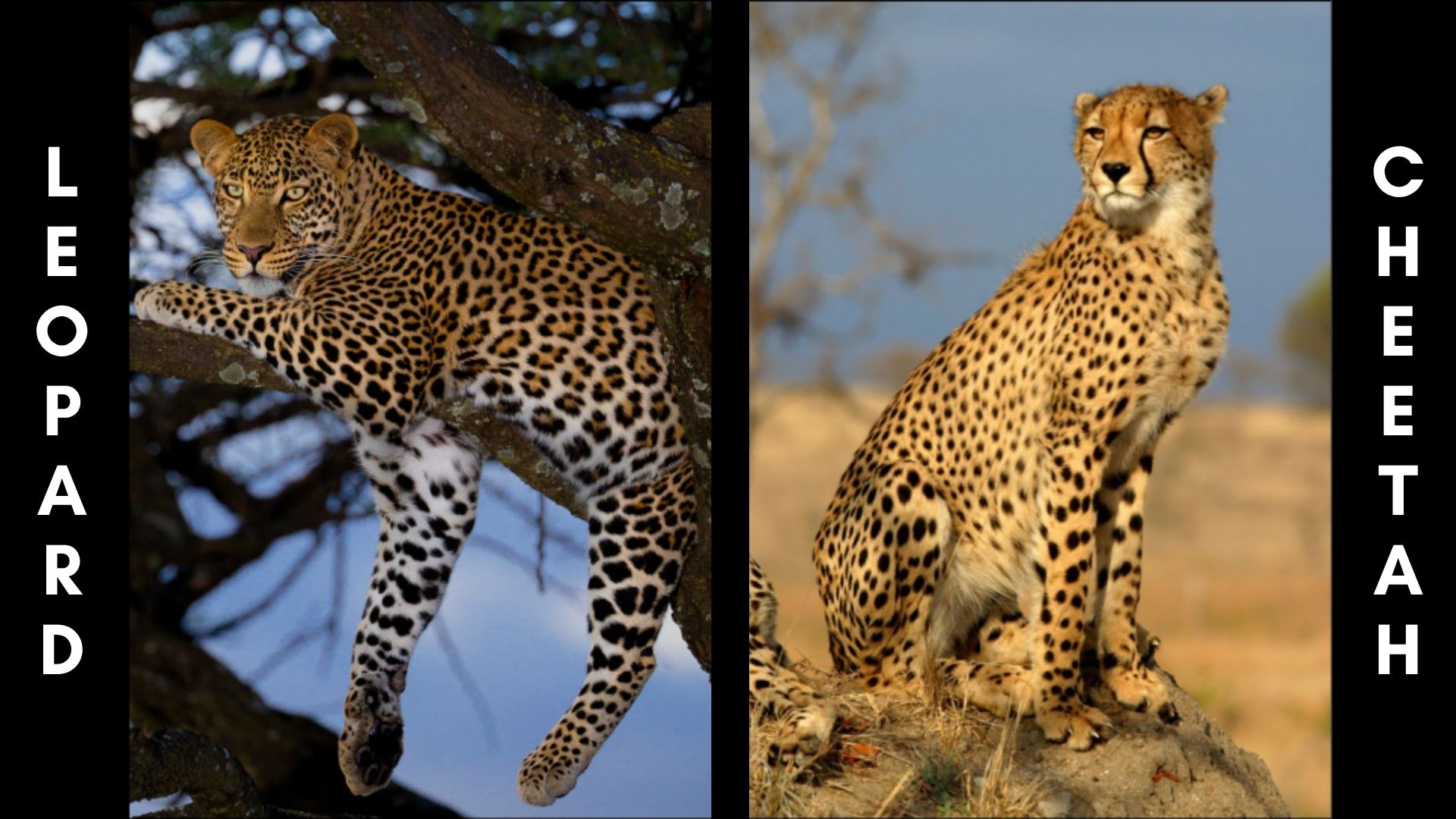
However, their differences are just as important. The cheetah represents raw speed and urgency, built for pursuit, while the leopard embodies stealth, strength, and control. This contrast, combined with their visual resemblance, made them perfect for depicting a high-intensity chase driven by instinct and survival.
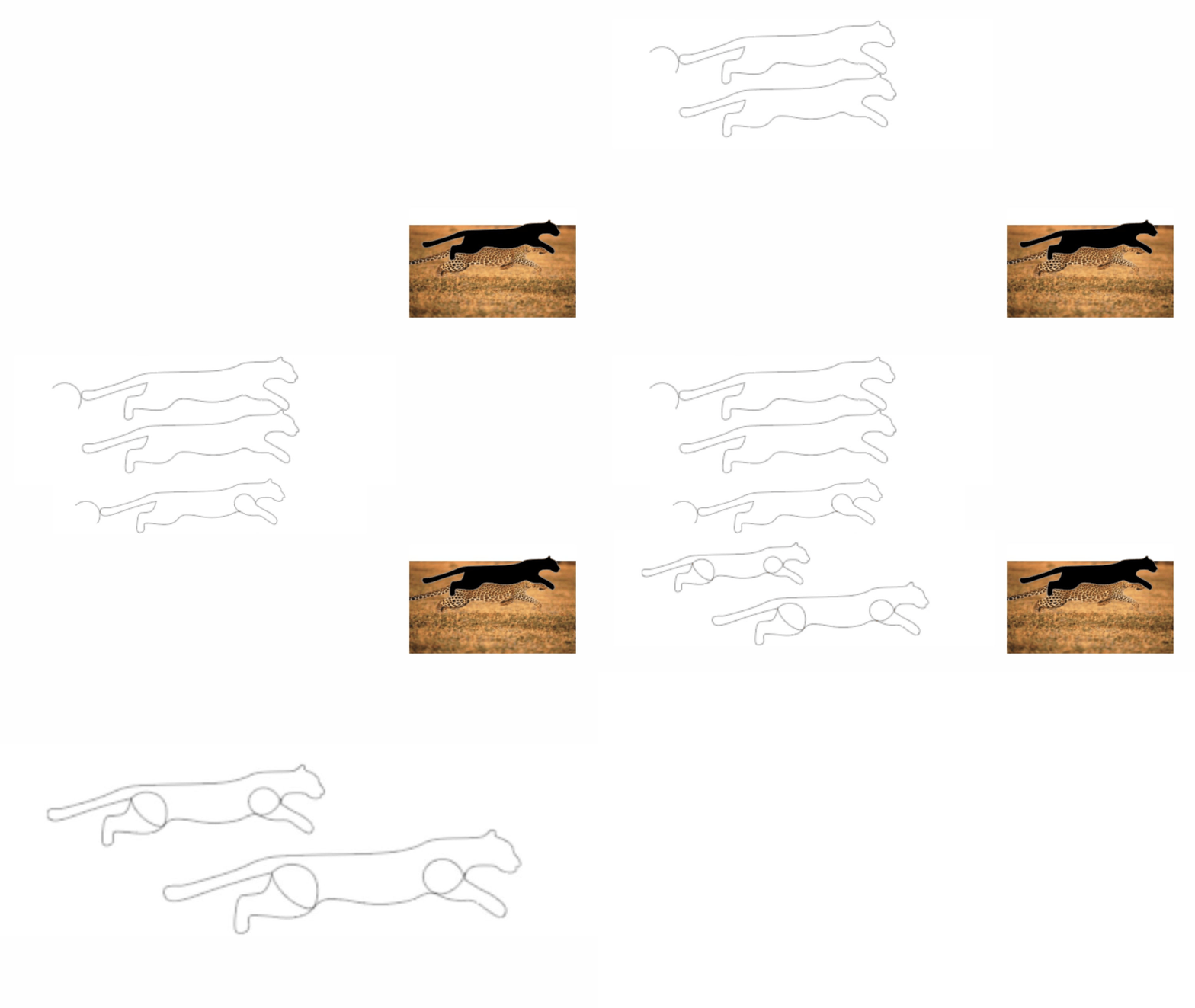
To translate this into a physical form, I began by studying real references and tracing the animals in motion using Illustrator. Instead of drawing static poses, I focused on capturing key frames of a running sequence, breaking down the movement into simplified silhouettes.
These iterations helped me:
Understand how the body stretches and compresses during motion
Identify pivot points for joints
Simplify complex anatomy into buildable forms
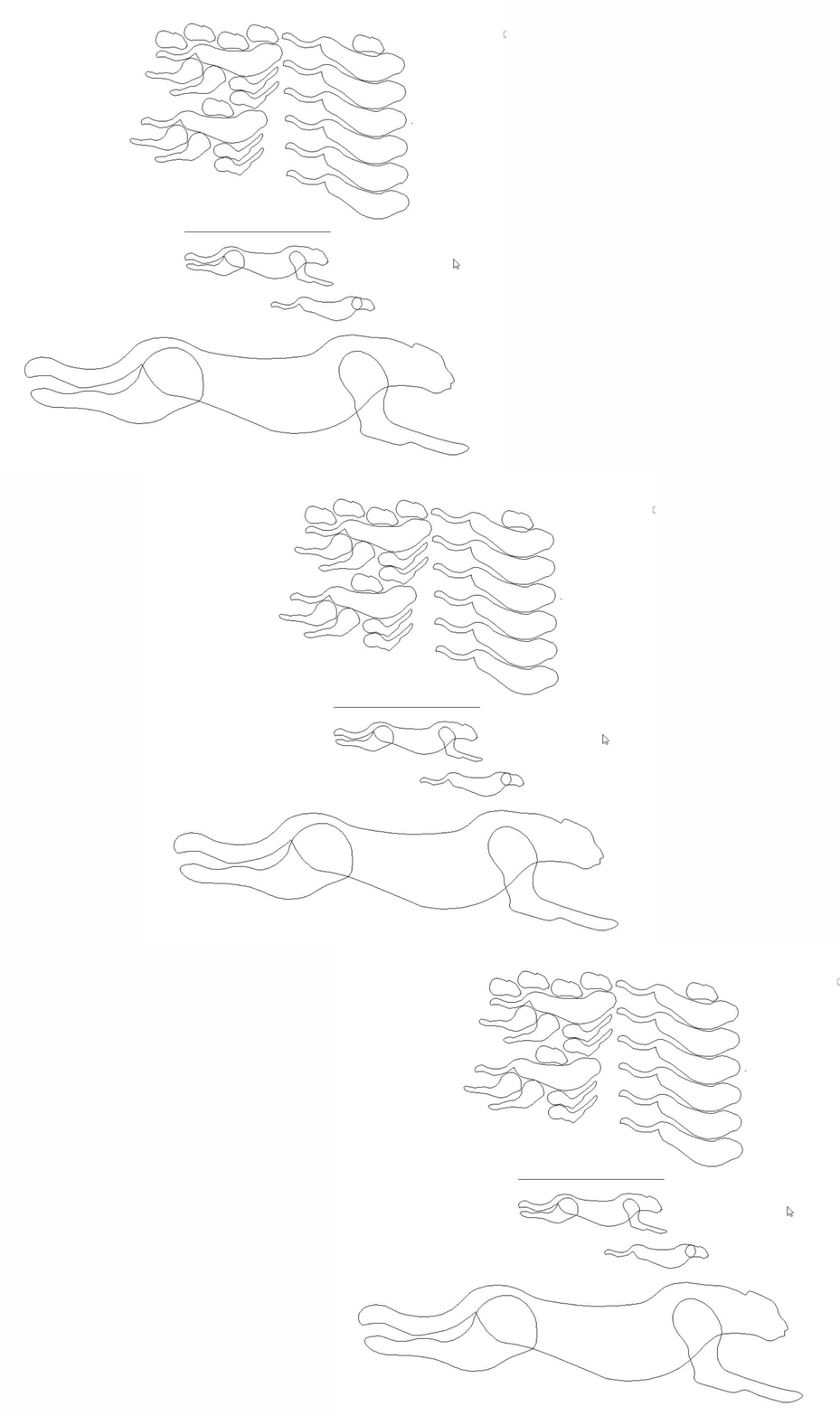
Multiple variations were explored before arriving at a final stretched running posture that felt both dynamic and mechanically feasible.
The goal was not anatomical accuracy, but to capture the essence of motion in its simplest form.
This tracing process became the foundation for the final model, directly informing both the form and the mechanism.
MECHANISM
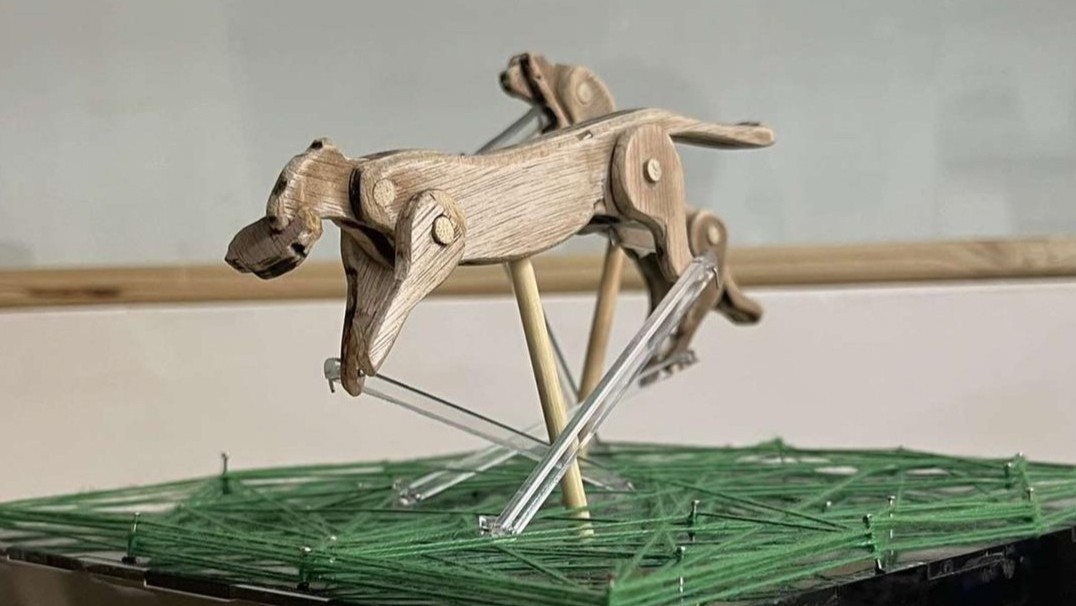
At the heart of the model is a simple crank mechanism that drives the entire system.
When rotated manually, the crank converts circular motion into an alternating vertical movement. This creates a rhythmic bouncing effect, giving the illusion that both animals are running.
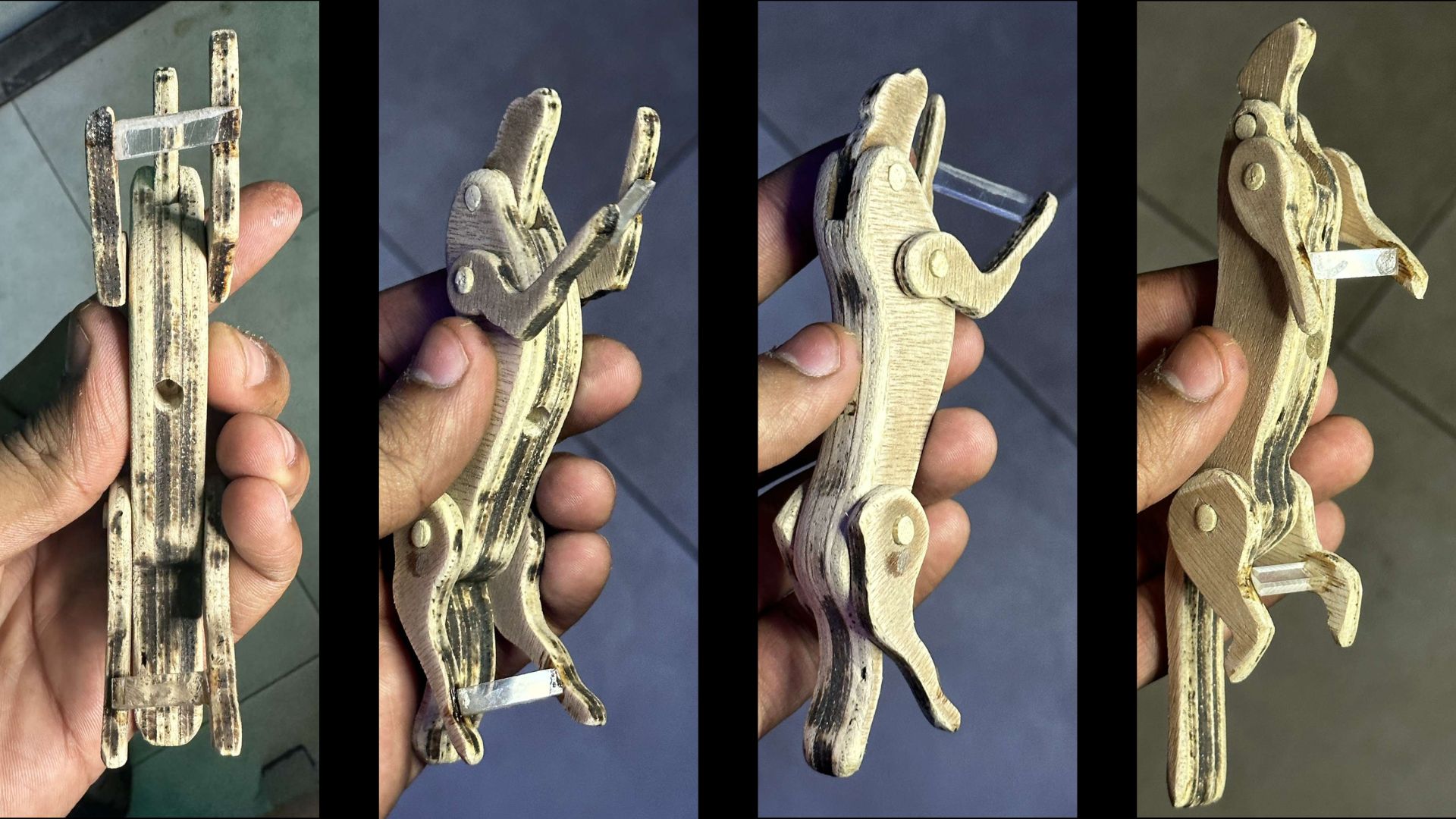
The legs are connected using pivot joints made from skewers, allowing them to rotate freely. However, certain points are fixed, creating constraints that guide the motion in a controlled way.
This balance between movement and restriction is what makes the system work.
Rotary input → converted into oscillating motion
Pivot joints → allow flexibility
Fixed constraints → create direction and rhythm
The result is a continuous motion loop that visually communicates a chase.
BUILD
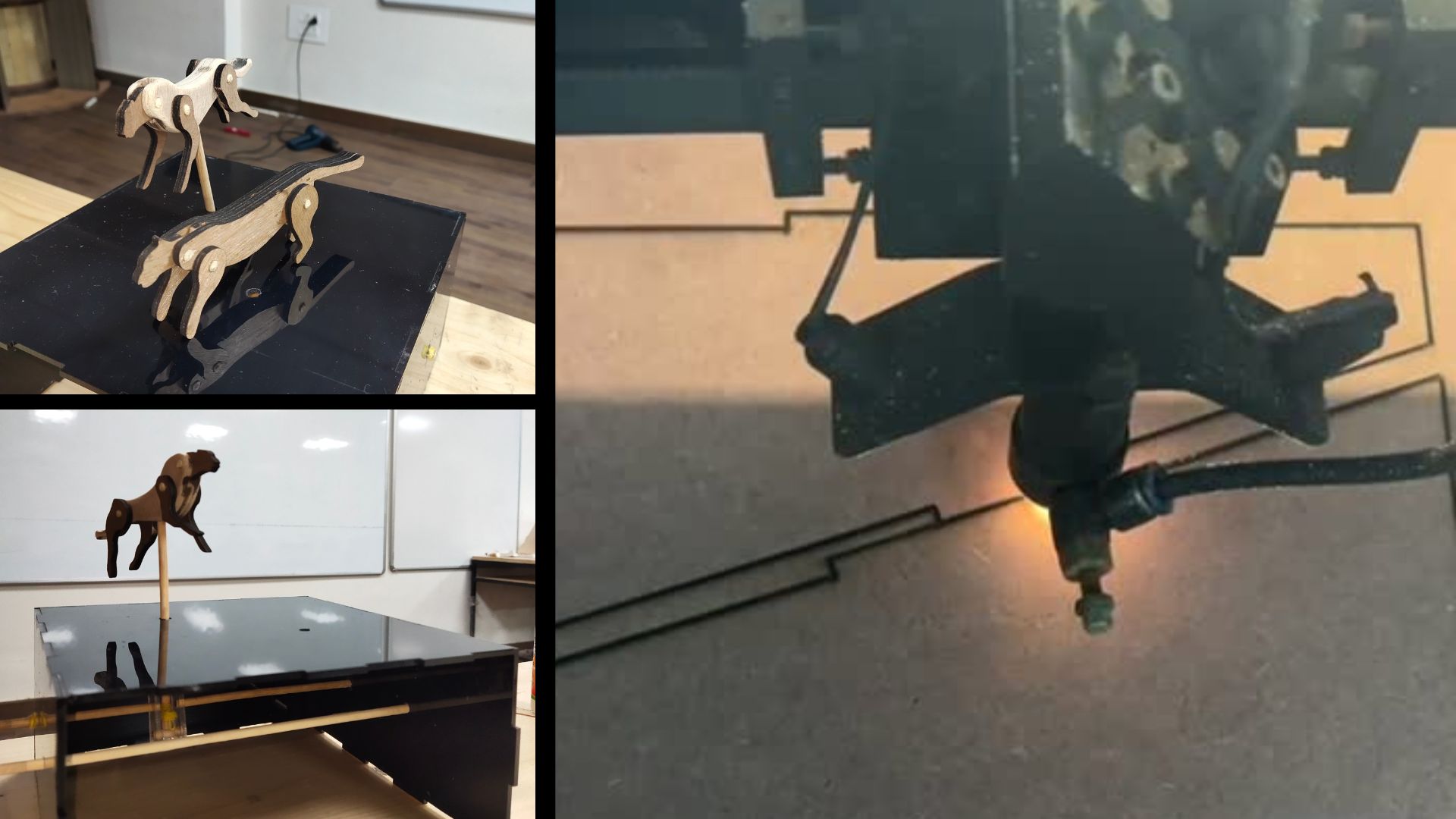
The fabrication process combined digital precision with manual assembly.
All the parts were laser cut from plywood, ensuring accuracy and consistency. These components were then assembled by hand using adhesives, with careful alignment of joints and pivots.
The mechanism was housed inside a custom-built box, with acrylic elements used to support the internal structure. This enclosure hides the complexity of the system, allowing the focus to remain on the movement above.
The build process was straightforward, but required attention to detail to ensure smooth motion and alignment.
ENVIRONMENT
Once the model was functional, it still felt incomplete without a sense of context.
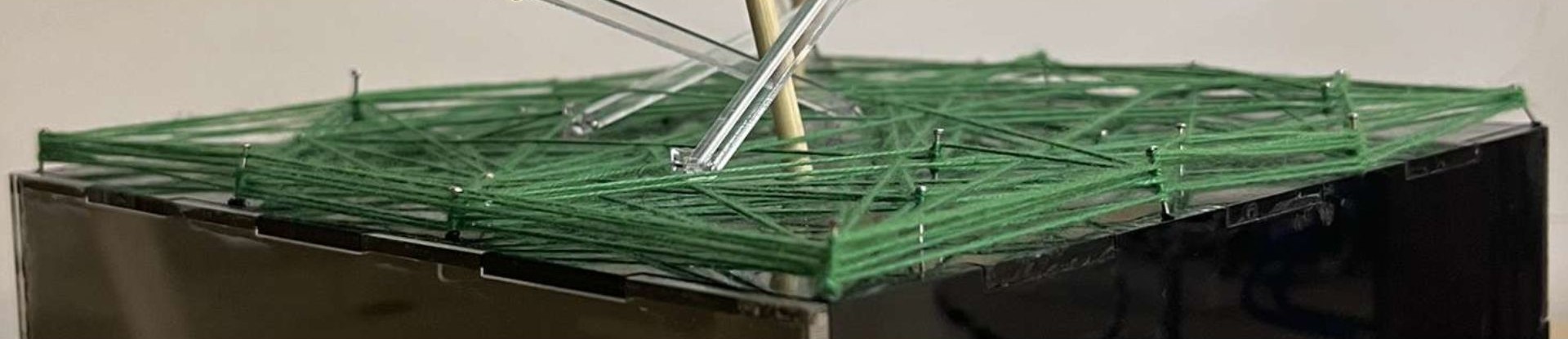
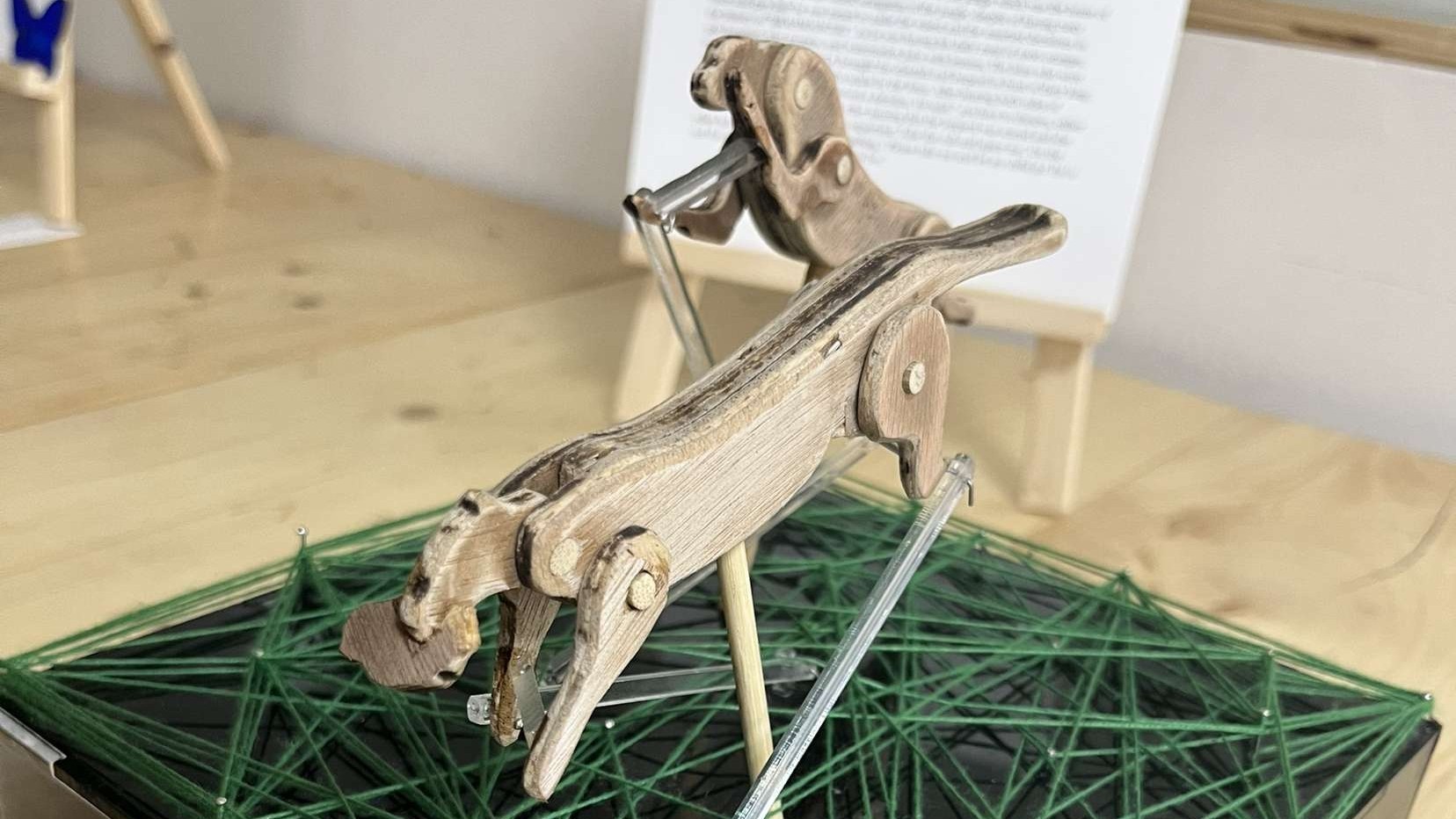
To address this, I created a ground layer using a simple but effective technique. Small holes were made across the base, into which pins were inserted. Threads were then woven between these pins in an abstract pattern.
This created a textured surface that loosely represents grass, adding depth and visual interest without distracting from the main model.
It’s subtle, but it completes the scene.
OUTCOME
The final model captures a single moment, but does so continuously.
As the crank rotates, the chase repeats creating a loop of motion that keeps the moment alive. The viewer doesn’t need explanation; the movement itself communicates the story.
The project demonstrates how simple mechanical systems can be used to create expressive and engaging experiences. It shows that complexity is not always necessary — clarity and intention matter more.
REFLECTION
This being my first major project, it had a strong impact on how I approach design.
It made me realize that mechanisms are not just technical systems — they can be used as tools for expression. Even a simple movement, when designed thoughtfully, can carry meaning.
I also learned the importance of focusing on the right idea. Instead of trying to do everything, choosing one strong moment and developing it properly can lead to a much more powerful outcome.
Looking back, the project is simple in its execution, but the thinking behind it is something I still carry forward.
Design is not just about making things work.
It’s about making them communicate.
01
02
03
04
05
06
07